April 17-18, 2015
College of the Holy Cross
Worcester, MA
Take the attendee survey
Programs
- Online, mobile-friendly version
- PDF [updated 4/24/2015]
- Student Posters Program
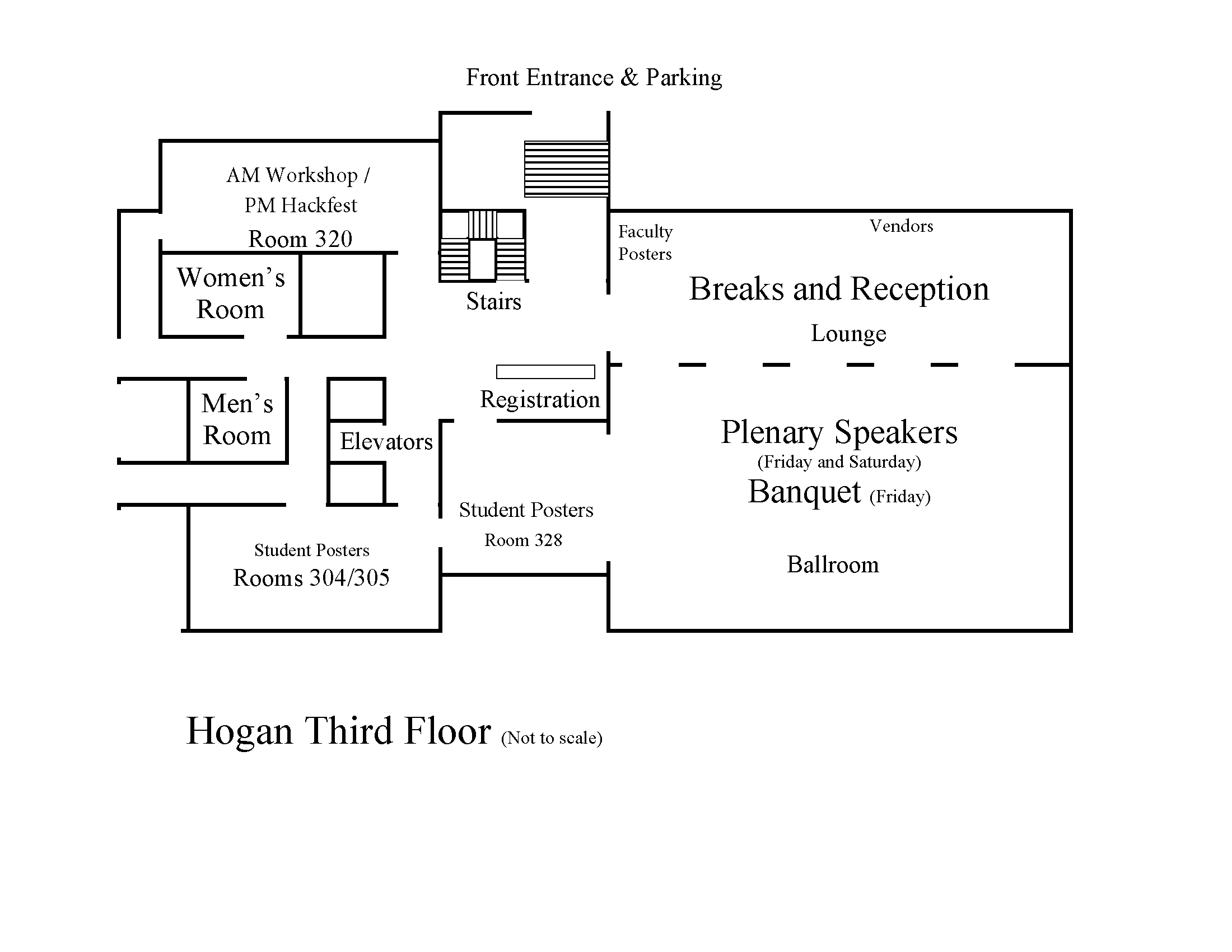
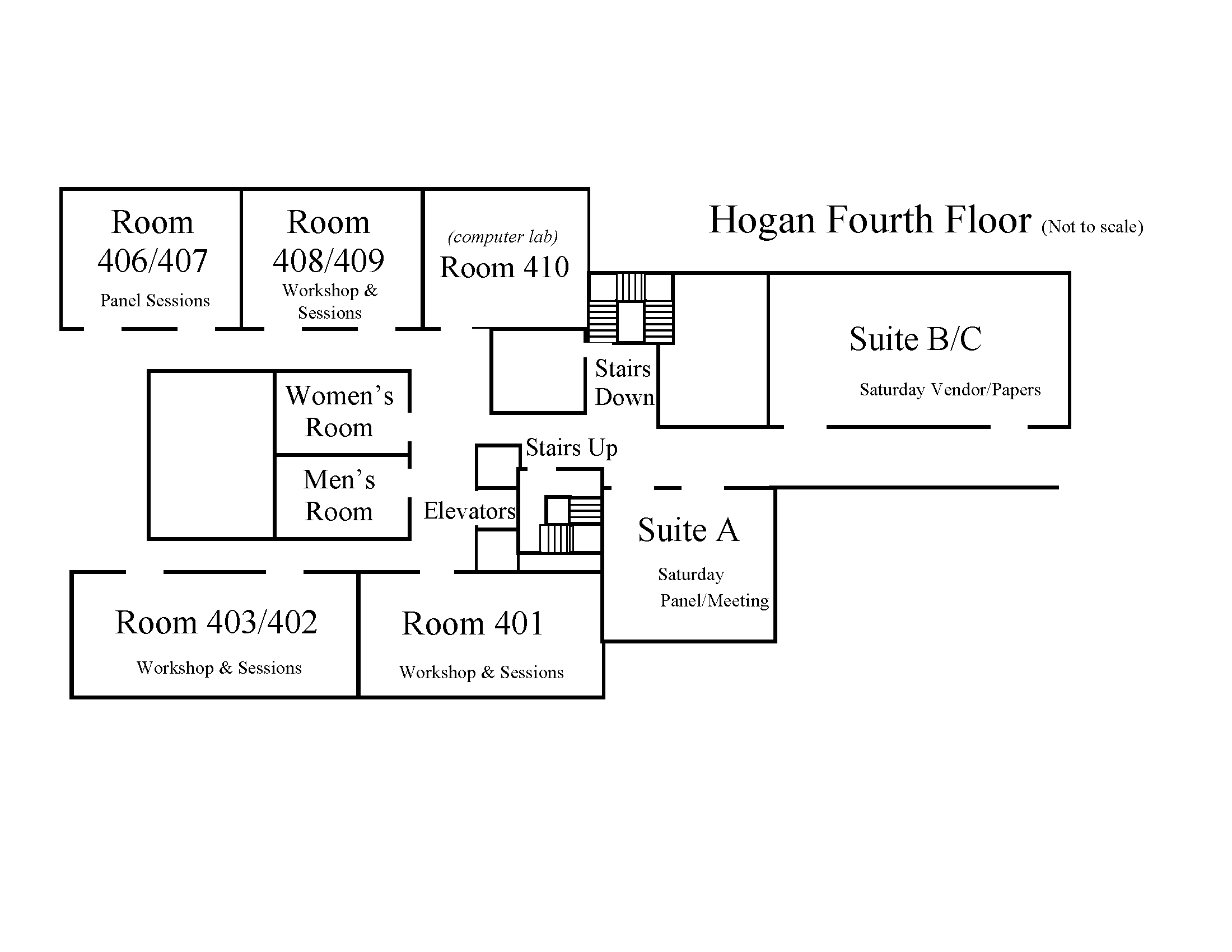
Maps
Call for Participation
Important Dates
| Date | Deadline | Categories |
|---|---|---|
| 11/7/14 | Submission | Papers, Panels, Lightning Talks, Tutorials, Workshops |
| 12/1/14 | Review | Papers, Panels, Lightning Talks, Tutorials, Workshops |
| 12/22/14 | Notification | Papers, Panels, Lightning Talks, Tutorials, Workshops |
| 1/2/15 | Submission | Faculty and Graduate Student Posters |
| 1/12/15 | Review | Faculty and Graduate Student Posters |
| 1/17/15 | Notification | Faculty and Graduate Student Posters |
| 1/24/15 | Camera Ready | Papers, Panels, Lightning Talks, Tutorials, Workshops, Posters |
| 2/27/15 | Submission | Undergraduate Student Poster Abstracts |
| 3/13/15 | Notification | Undergraduate Student Posters |
| 3/23/15 | Camera Ready | Undergraduate Student Poster Abstracts |
| 3/27/15 | Early registration |
Hotel
Courtyard Marriott, Worcester
72 Grove Street
Worcester, Massachusetts 01605
Google map
Reservations
Book before March 23rd to get the conference rate of $93.
- 508-363-0300 — Ask for a room under The Consortium for Computing Sciences in College room block.
- By web — Use any browser except Chrome.
Keynotes
Sep Kamvar (Friday)
Title:
Self-Limiting Software and Sociotechnical Ecosystems
Abstract:
In this talk, I will discuss three stages of the web, from library, to self-expression medium, to application environment. I will discuss some opportunities that each mode can provide: including access to information, cultivation of empathy, and ability to work collectively. I will give some examples from my own work, including Kaltix, a personalized search engine that was acquired by Google in 2003, We Feel Fine, an art piece that visualizes the world’s emotions in real time, and Wildflower Montessori, a decentralized network of schools fostered by a software-supported collective process. In showing these, I will propose a philosophical framework for creating social software, that takes its inspiration from eastern medicine and permaculture. I will describe some principles that underly the framework, and suggest where they might lead.
Bio:
Sep Kamvar is the LG Career Development Professor of Media Arts and Sciences, and director of the Social Computing group at the MIT Media Lab. His research focuses on social computing and information management.
From 2003 to 2007, Kamvar was the head of personalization at Google. Prior to Google, he was founder and CEO of Kaltix, a personalized search company that was acquired by Google in 2003. He has been a consulting professor at the Institute for Computational and Mathematical Engineering at Stanford University.
Kamvar is the author of two books and over 40 technical publications and patents in the fields of search and social computing. He is on the technical advisory boards of several companies, and his artwork has been exhibited at The Museum of Modern Art in New York, the Victoria and Albert Musem in London, and the National Museum of Contemporary Art in Athens. Kamvar received his PhD in scientific computing and computational mathematics from Stanford University, and an AB in chemistry from Princeton University.
Kim Bruce, Pomona College (Saturday)
Title:
Programming with Grace
Abstract:
What if there was a language that was explicitly designed to help students understand how to do object-oriented programming without saddling them with obscure and complicated syntax and convoluted constructs?
We’ve constructed such a language that can be used to teach novices using the features of modern programming languages, but without all the overhead of existing industrial strength languages. Dialects can be used to introduce new features (e.g. graphics) or to restrict the language (eliminating constructs, requiring type annotations, etc.). Moreover, the language is designed to facilitate moving to languages like Java, Python, and C++.
We taught an introductory course using Grace this fall and found it to be both effective and a pleasure to teach (and learn). In this talk we will give a quick overview of the language, explain how we taught it, discuss student feedback on the use of Grace, and provide comparisons with the use of languages like Java and Python for teaching novices. A draft introductory textbook using Grace is available on-line at http://www.cs.pomona.edu/~kim/ProgrammingWithGrace/bookmain.pdf . A Grace compiler and editor runs on the web (no installation needed) and is available at http://www.cs.pomona.edu/~kim/minigrace/ .
The Grace programming language was designed by Andrew Black, Kim Bruce, and James Noble, with essential support from Michael Homer and Tim Jones. More information on Grace is available at www.grace.org.
Bio:
Kim B. Bruce is the Reuben C. and Eleanor Winslow Professor of Computer Science at Pomona College. Previously he was the Frederick Latimer Wells Professor of Computer Science at Williams College. He was instrumental in setting up and chairing computer science departments at both institutions.
His research has ranged from mathematical logic to programming languages to linguistics. He has been awarded numerous research grants from the National Science Foundation to support his research in programming languages and CS education. He has contributed to several national curricula in computer science. The author of numerous papers in programming languages and computer science education, he is also the co-author of an introductory textbook in Java and the author of a research monograph on the theory of object-oriented languages. In 2005 he was presented the ACM SIGCSE 2005 award for Outstanding Contributions to Computer Science Education.
Registration
Online registration will close on Monday, April 13, 2015
Early Registration (on or before Friday, March 27, 2015)
Full Registration: $125
Student Registration: $50
K-12 Teacher Registration: $50
Late/On-Site Registration
Full Registration: $155
Student Registration: $50
K-12 Teacher Registration: $50
Full registration includes
the conference banquet on Friday evening, admission to all sessions and pre-conference workshops, and one copy of the conference proceedings. It also includes membership in CCSC.
Luncheon on Saturday is NOT provided.
Student registration includes
the conference banquet on Friday evening, and admission to all sessions. Students who author regular papers or participate in the programming contest receive additional benefits. See the appropriate contest registration page for details.
Copies of the conference proceedings may be purchased for an additional fee.
K-12 Teacher registration includes
admission to all conference activities on Saturday, April 18, 2015 including the vendor display.
Copies of the conference proceedings may be purchased for an additional fee.
Note: Tickets for the conference banquet depend on availability for late and on-site registrations. Banquet attendance is not guaranteed in these cases.
The Programming Contest Registration process has changed.
Please review the information on the Programming Contest page before attempting to register your team.
Hackfest 2015
To register for Hackfest 2015, please see the Hackfest page.
Register and pay online
Use the CCSCNE Registration System: https://ccsc.org/ne2015/index.php
If you registered online for the CCSCNE 2012, CCSCNE 2013, or CCSCNE 2014 then you already have an account. Your e-mail is your user name.
If you already have an account, you may logon and register for CCSCNE 2015.
If you do not have an account, you need to create one, and then register for CCSCNE 2015.
You may pay by credit card or PayPal.
- OR –
Register and pay via U.S. mail
Print the appropriate form below and mail it along with check (payable to CCSC) to
Prof. Mark Hoffman
Department of Mathematics and Computer Science
Quinnipiac University
275 Mount Carmel Avenue
TH-ENR
Hamden, CT 06518
Email:
Phone: (203) 582-8449
Forms
Conference Committee
| Chair | Name | |
|---|---|---|
| Conference Chair | Laurie King | |
| Conference Chair | Karl Wurst | |
| Program Chair | Jim Teresco | |
| Papers Chairs | Ian MacDonald | |
| Papers Chairs | Stan Kurkovsky | |
| Panels and Lightning Talks Chairs | Susan Imberman | |
| Panels and Lightning Talks Chairs | Yana Kortsarts | |
| Tutorials and Workshops Chairs | Bonnie MacKellar | |
| Tutorials and Workshops Chairs | Krista Hill | |
| Student Posters Chairs | Sandeep Mitra | |
| Student Posters Chairs | Alice Fischer | |
| Student Posters Chairs | Robert Dugan | |
| Student Posters Chairs | Aparna Mahadev | |
| Programming Contest Chairs | Frank Ford | |
| Programming Contest Chairs | Delbert Hart | |
| Programming Contest Chairs | Kevin Walsh | |
| Hackfest Chairs | Stoney Jackson | |
| Hackfest Chairs | Heidi Ellis | |
| Registration Chair | Mark Hoffman | |
| Faculty Posters Chair | John Russo | |
| Publicity Chair | Nadine Hanebutte | |
| Speakers Chairs | Ingrid Russell | |
| Speakers Chairs | Val Kolesnikov | |
| K-12/CSTA Chair | Padmaja Bandaru | |
| K-12/CSTA Chair | Kelly Powers | |
| Vendors Chair | Karl Wurst |
Gold Sponsors

Silver Sponsors